How Macau beat the pandemic,
https://www.scmp.com/magazines/post-magazine/long-reads/article/3081268/how-macaus-health-care-system-was-primed-beat
- As Macau partied on December 31, 2019, the SSM was notified by the National Health Commission that there was an outbreak of an unknown pneumonia in Wuhan. The following day, the SSM implemented temperature checks for all flights from Wuhan, and alerted the public to take extra hygiene measures and not panic.
- On January 22, the SSM announced that all residents and foreign workers could purchase 10 face masks per person every 10 days at outpatient clinics and pharmacies in the city. A day later, with news of a second imported case confirmed – a 66-year old Wuhan man who had entered Macau from Zhuhai – Chief Executive Ho announced that the government had ordered 20 million masks for affordable sales to residents and non-resident workers.
- Hygiene orders were widely publicised by the SSM and the Macao Government Tourism Office cancelled all Lunar New Year celebrations, scuppering the Year of the Rat parade.
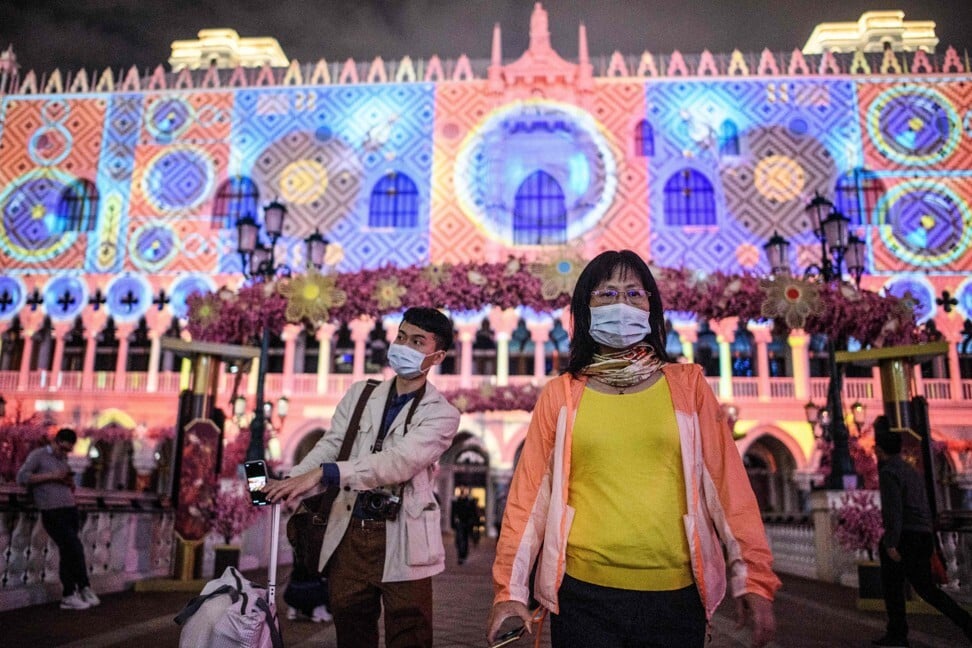
- Visitors wear face masks as they walk outside The Venetian Macao, on January 22. Photo: AFP
- On January 24, universities were ordered to extend their Lunar New Year holiday until February 10 and primary and secondary schools were to remain closed until February 11. The Sports Bureau announced all of its facilities closed, too.
- In the days that followed more decisive steps were taken: the Portas do Cerco border crossing to Zhuhai reduced opening hours on January 25; a day later it was announced that all of the more than 1,000 travellers from Hubei province who had entered Macau between December 1 and January 26 were to be quarantined.
- Further announcements were made that no travellers who had been to Hubei in the previous 14 days could enter any casino. From January 27, anyone who had been to Hubei in the previous 14 days could not enter Macau without a doctor’s note proving they were free of the coronavirus. On January 28, in accordance with decisions made by the central government, Macau announced that entrance of all mainland visitors would be temporarily suspended.
- In a historic stroke on February 4, Macau announced that
- all casinos would have to cease operations for two weeks. As would all gathering places, from cinemas to restaurants, bars and nightclubs.
- The government’s rapid reaction kept the infection rate to a mere 11, until a second wave of cases, triggered by arrivals from overseas, emerged in mid-March, raising the tally to 45 by early April, most caught in designated quarantine hotels.
How Macau’s health care system was primed to beat the pandemic, despite only opening a medical school months ago
Macau
University of Science and Technology opened its Faculty of Medicine in
September, marking a new chapter for the former Portuguese colony. Its
success in controlling the Covid-19 outbreak has led to calls for help
from around the world.
On
January 22, Macau’s first Covid-19 case was confirmed: a 52-year-old
woman from Wuhan who had taken the high-speed rail to Zhuhai and crossed
into the Chinese special administrative region a few days before.
,
who had been sworn in only a month earlier as the city commemorated the
20-year anniversary of its handover from Portugal, announced the
creation of the Novel Coronavirus Response and Coordination Centre,
which replaced the Interdepartmental Working Group Against Pneumonia of
Unknown Cause he had set up just two weeks earlier, on January 5.
On
January 22, I was riding shotgun with Dr Billy Chan, 59, a medical
simulation training director at the Macau University of Science and
Technology (MUST). Chan was running errands around Macau in preparation
for a medical conference, and as his Mercedes cruised into the New
Orient Landmark Hotel’s underground car park, we saw two ambulances in
the loading docks. Paramedics in hazmat suits stood sentinel as Chan
remarked, “Mate, that’s not right. Something’s going down. Could be
coronavirus.”
After
his meeting, Chan went to pay the car park fee in the lobby, where we
learned that the 52-year-old woman from Wuhan had been a guest at the
hotel. Several floors above us, emergency responders were sterilising
her room and removing two of the woman’s travelling companions.
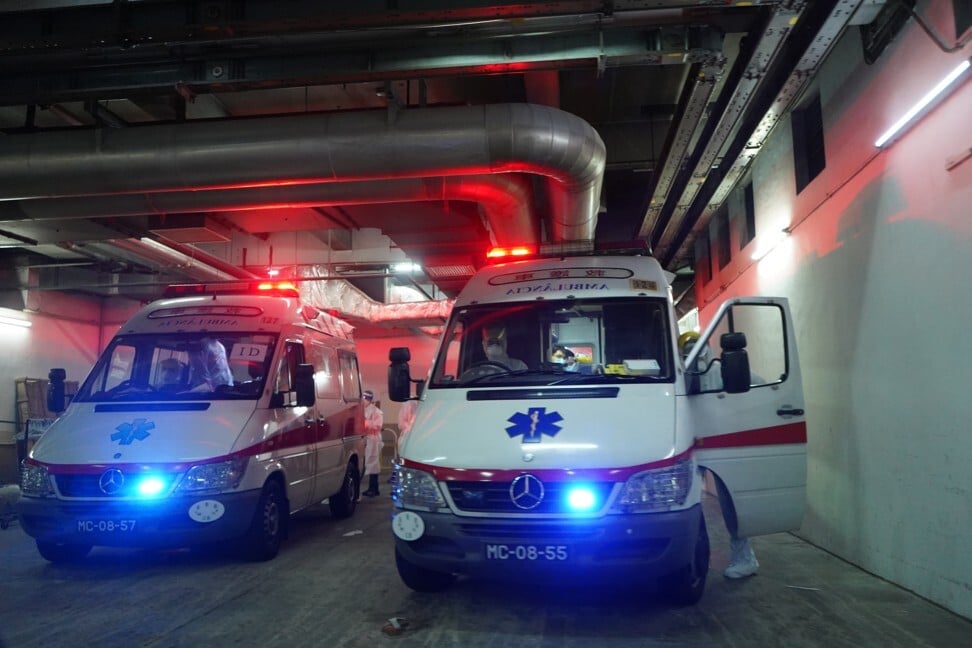
Ambulances in the New Orient Landmark Hotel’s underground car park, in Macau, on January 22. Photo: Christopher Cottrell
We left and the two ambulances were soon lined up behind us as the Mercedes idled in the misty snarl of downtown Macau traffic.
“Take
a picture,” Chan said. I fumbled to get a few crooked shots of the lead
ambulance just off our rear bumper. As the light turned green and
traffic started to move, the ambulances picked up speed, turning at the
intersection towards the special government triage centre at the Centro
Hospitalar Conde de São Januário.
Under
directives from the Macau Health Bureau (Serviços de Saúde, or SSM),
all suspected cases of the novel coronavirus were to be sent there via
special ambulance, not treated in local clinics or private hospitals.
Seeing
the hazmat suits and ambulances was frightening, but also
exhilarating. After all, such a scenario was what Chan had been training
Macau’s health care workers for since the turn of the last decade. And
before moving back to his father’s ancestral Macau in 2009, he had spent
nearly 25 years providing medical simulation training in his adopted
home of Australia, as well as across Asia.
I first met Chan
on May 11, 2011. He was launching a non-profit medical education
conference called the Sino-Luso International Medical Forum, drawing on
Macau’s unique historical reach from southern China to other
Portuguese-speaking (Lusophone) places: from Lisbon to Luanda, Brasilia
to Bissau.
“Welcome,
mate, how ya going?” said the affable Chinese-Australian as I entered a
conference room of the Dr Stanley Ho Medical Centre in downtown Macau.
“Call me Billy,” he added, flashing what would become a familiar grin.


He
struck me as very different from the legions of gaming executives I’d
interviewed in Macau since first reporting in the city in 2005. He
wasn’t sucking up or looking down his nose. His hair was combed but not
coiffed, glasses square but not the usual academic thick-lensed variety.
“This
is Colonel Wu Jun,” said Chan in his Australian twang as he introduced
me to some of the key speakers that day. “The colonel’s a burns expert
from the Third Military Medical University of Chongqing who led the
relief efforts for the May 2008 Sichuan earthquake. He gave former
United Nations secretary general Ban Ki-moon an inspection of the
situation in those tragic days.”
“And
this is Professor Manson Fok, president of the Sino-Luso International
Medical Forum,” Chan said austerely. Moments later, he whispered, “Mate,
Professor Fok is a humble guy, but his father is Henry Fok.”
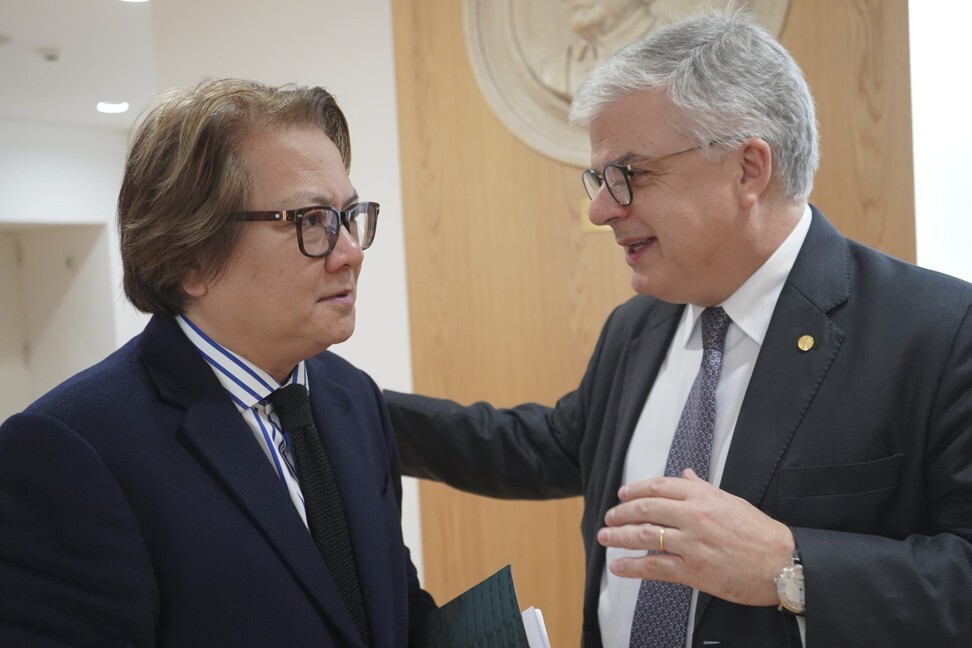
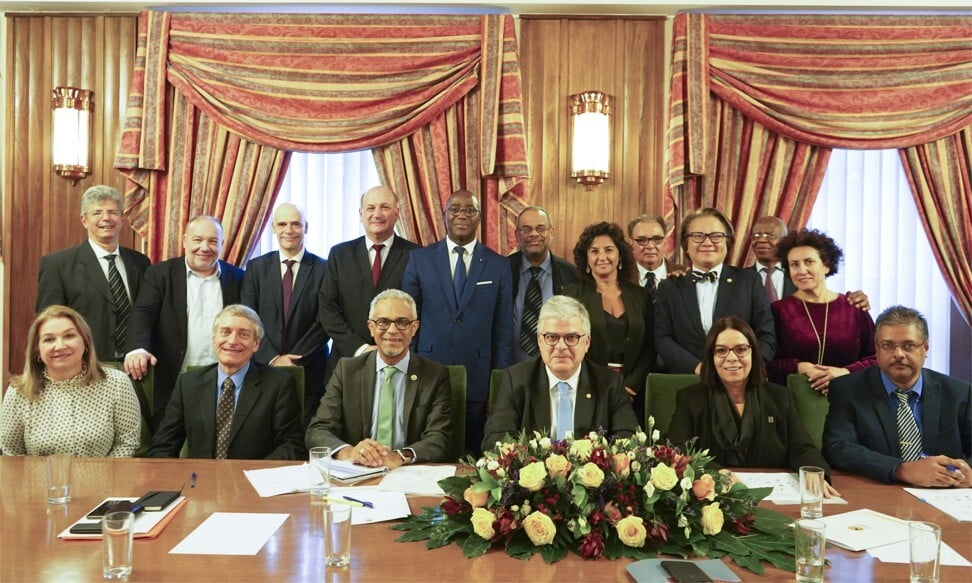
Dr
Billy Chan (left), of the Macau University of Science and Technology,
with Fausto Pinto, dean of the University of Lisbon’s Faculty of
Medicine. Photo: Christopher Cottrell
I
recognised the name instantly: the legendary billionaire who was Hong
Kong’s direct phone line to Chinese presidents. Indeed, the Avenida
Doutor Henry Fok cuts straight like a scalpel south of the MUST campus
in Cotai, next to Macau International Airport.
From
that 2011 meeting and the seeds of the inaugural Sino-Luso
International Medical Forum, which has since run 52 conferences and
trained more than 10,000 frontline health care workers across Asia, grew
Macau’s first medical school, MUST’s Faculty of Medicine, which opened
last September. And the first major issue facing its students and
faculty: Covid-19.
“My
phone won’t stop ringing from Portugal, Europe, New York, Australia,
Cambodia, the Philippines,” says Chan. “Everyone wants our help getting
masks, goggles, protective gowns, etc. We really can be leveraged to
bridge Sino and Luso regional networks to fight Covid-19.”
Beyond
that, the Faculty of Medicine has been focusing on groundbreaking
studies into paediatric faecal-oral transmission of Covid-19, a new
artificial intelligence algorithm that tracks in less than 20 seconds
the level of viral attack on the lungs, and biotechnology research into a
vaccine.
Harvard-
and MIT-trained ophthalmologist Professor Zhang Kang is one of several
sharp blades Dean Manson Fok brought into the first medical teaching
team at MUST last September. Zhang’s experience and contacts across
China with AI research allowed him to instantly collaborate with
frontline doctors from Wuhan, Beijing, Tianjin and Guangzhou when the
virus broke out.
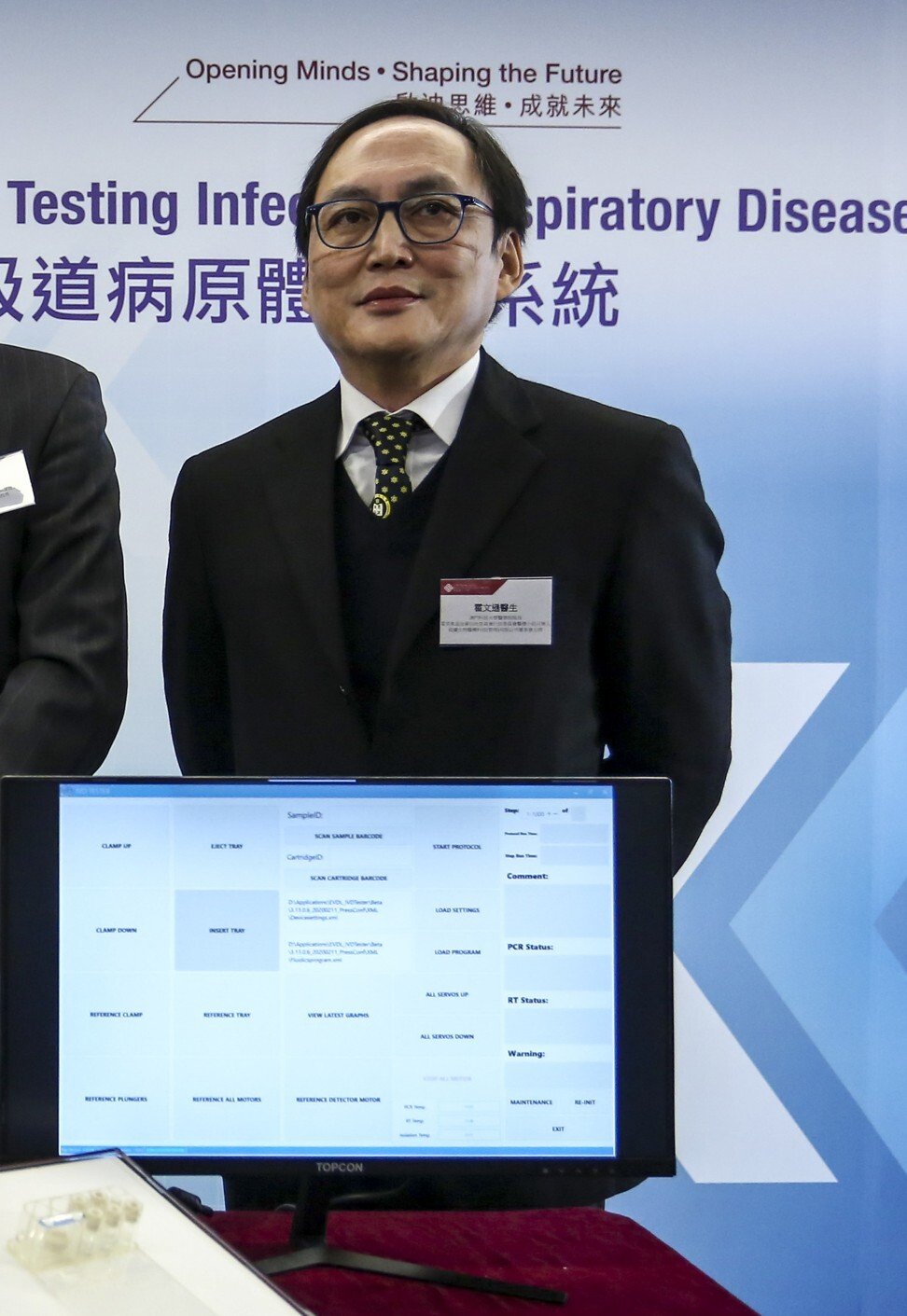
Dr Manson Fok, dean of MUST’s Faculty of Medicine. Photo: SCMP/ Jonathan Wong
Published in the Nature Medicine
journal in March, Zhang’s study with MUST’s Faculty of Medicine and the
Guangzhou Women and Children’s Medical Centre is titled
“Characteristics of paediatric SARS-CoV-2 infection and potential
evidence for persistent faecal viral shedding”.
“We
learned that SARS-CoV-2, or Covid-19, is spread more in children with
faecal-oral transmission, which suggests that diagnosis with rectal
swabs should be conducted,” explained Zhang, at Chan’s skills centre at
MUST in early March.
“In
China, we discovered with clinical cases a few kids were released
because they showed no symptoms after a throat swab. But they came back
again with what was thought to be reinfection. Checking their stools
revealed novel coronavirus nucleic acids. So we recommend both throat
and rectal swabs with children before releasing them from hospitals.
They also seem stronger at fighting this than adults because they
typically do not have high fever, coughs, fatigue or pneumonia.
“We
also learned that the novel coronavirus nucleic acid can survive in
faecal matter and can contaminate water supplies, behaving like cholera
in this respect.”
In
addition to supporting Zhang’s research, Fok is donating medical
equipment on behalf of Sino-Luso to the Doctor Alliance of Union of
Youth Federation of Cambodia, the Faculty of Medicine at the University
of Lisbon and three hospitals in Portugal, with more in the pipeline.
Through his private companies in Hong Kong he is also rallying research
into a vaccine.
Having a vaccine is one thing, scaling up production, distribution and affordable access for seven billion people is quite another
“We
can now analyse specific stages of the viral attack on the lungs for
treatment within 20 seconds,” says Zhang. “We have this software in the
cloud for downloading on behalf of our Faculty of Medicine [at MUST …]
We’ve got this online across China, in parts of the United States, Japan
and South Korea. I hope to have it soon in the field in Iran, Italy and
elsewhere where it is desperately needed.”
Pulitzer Prize-winning science journalist Laurie Garrett, author of The Coming Plague: Newly Emerging Diseases in a World Out of Balance (1994) and Betrayal of Trust: The Collapse of Global Public Health (2000), paints a realistic picture of what vaccine treatments mean.
Garrett,
who covered the Ebola and Zika outbreaks, has previously noted that
scientists were unable to generate rapid vaccine regimes for the
coronaviruses severe acute respiratory syndrome (Sars) and Middle East
respiratory syndrome (Mers). She advises that viable vaccines for
Covid-19 are not merely a question of timetables for completion, but of
equitable delivery.
“Of
course we should seek a rapid vaccine development effort,” she says,
“but having a vaccine is one thing, scaling up production, distribution
and affordable access for seven billion people is quite another.” The
same pertains to short- and near-term care for Covid-19’s attacks.
“Treatments may be developed quickly but there will be problems with
scale-up and affordability.”
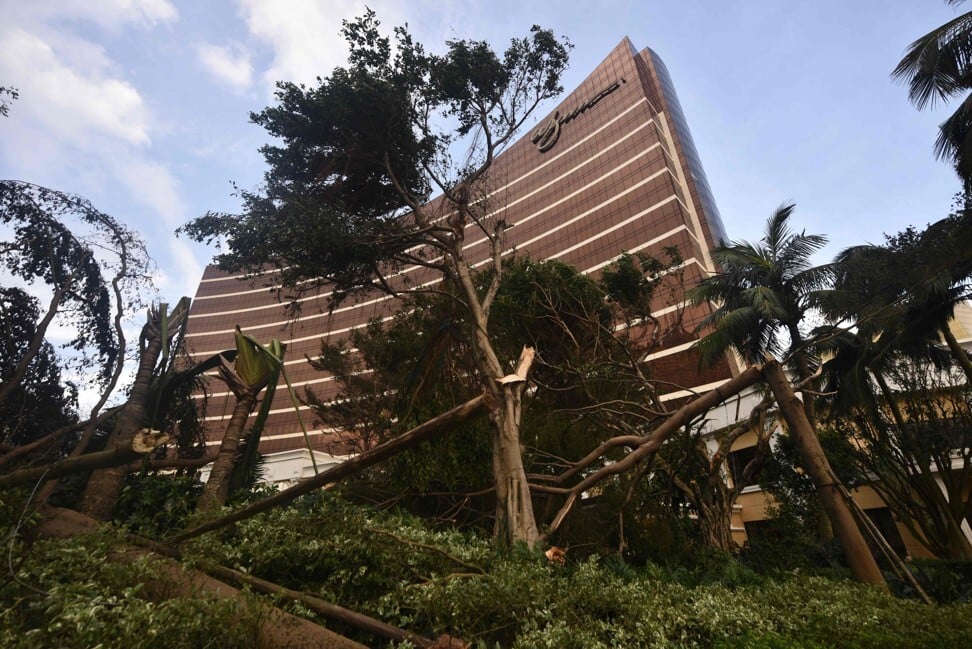
Trees damaged by Typhoon Hato in front of the Wynn Macau, on August 24, 2017. Photo: AFP
It was December 2012
when the Sino-Luso team began to feel they were making palpable
progress. Long before this virus, the city’s main mass casualty threat
stemmed from typhoons. Luckily, Dr Susan Briggs, a professor of surgery
at Harvard Medical School and trauma surgeon at Massachusetts General
Hospital, in Boston, was coming to provide training at the “Challenges
and Controversies in Disaster Medical Response” conference.
As
director of the International Medical Surgical Response Team under
Massachusetts General Hospital, she had led the emergency response
efforts for the September 11 attacks in New York in 2001, Hurricane
Katrina in 2005 and the Haiti earthquake in 2010.
Sporting
a crop of snow-white hair, she captivated Macau’s medical community and
media with trauma lessons from the front lines – of resuscitating New
Yorkers covered in dust from the freshly fallen twin towers and hacking
off crushed limbs in Haiti with machetes. “Macau will hopefully never
have to face these types of tragedies,” she said at the time.
Officials
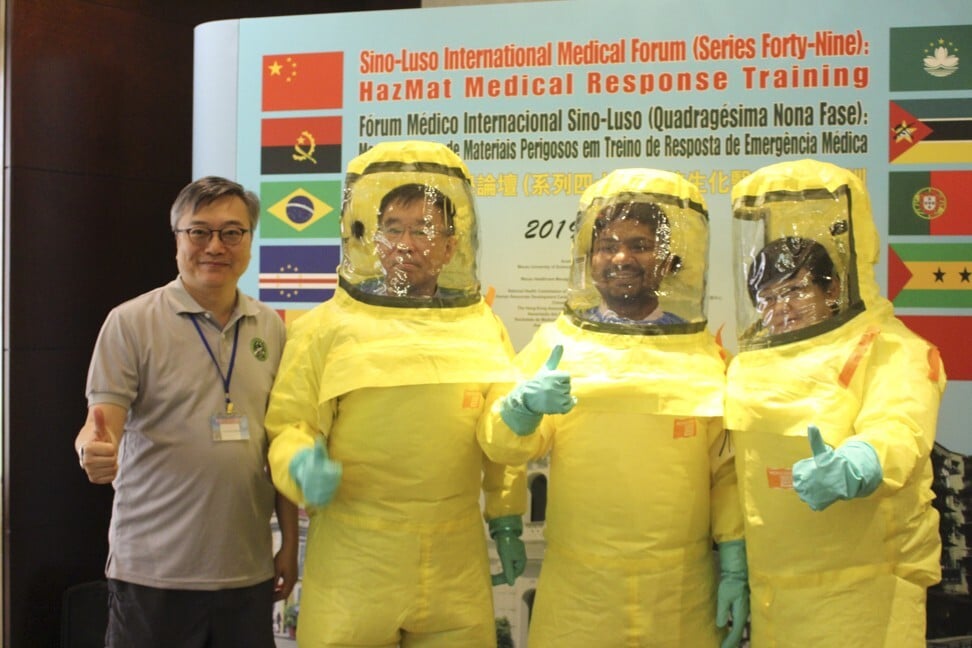
from Sri Lanka and China undergo training at last year’s Sino-Luso
International Medical Forum. Photo: Christopher Cottrell
Neighbouring
Guangdong province was a hotbed for Sars. Macau fended off bird flu,
swine flu and even legionnaires’ disease. Lethal typhoons lash it
annually with climate change increasing their ferocity. The city also
entertains tens of millions of tourists flowing through its casinos and
hotels every year – it welcomed more than 39 million visitors in 2019. A
mass-casualty incident in Macau would be devastating.
“The
first few years of the Sino-Luso forums were about injecting regular
energy and training into Macau’s frontline health care community,” says
Fok. “Making sure there were regular functions so stakeholders could
meet and exchange ideas was key to our success. Dr Briggs’ training
sessions really brought together a new medical community.”
“Dr
Fok and Billy Chan have made tremendous contributions to their
community’s disaster preparedness and response initiatives,” Briggs
says. “They have stressed that everyone is a provider in a mass-casualty
incident, regardless of profession.”
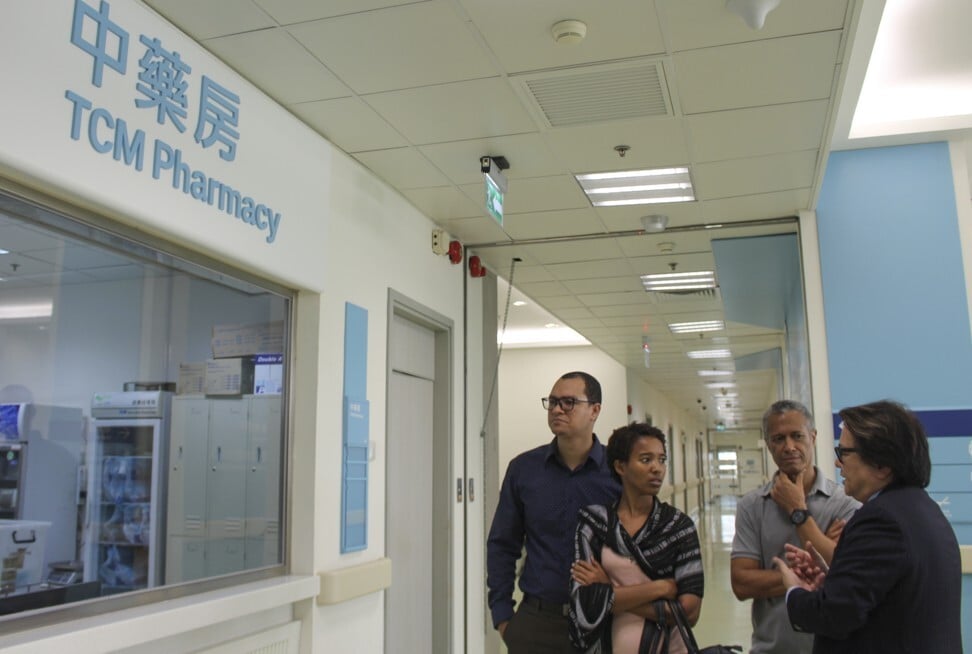
Chan in the traditional Chinese medicine ward at MUST’s University Hospital. Photo: Christopher Cottrell
From 1513, when the
Portuguese first sailed into the Pearl River Delta, to raising their
flag in Macau in 1557 and then lowering it on December 20, 1999, the
city never had a medical school. In the Portuguese territory there were
only a few European-trained doctors, missionaries or practitioners of
traditional Chinese medicine. In 1844, Portugal ceased administering
Macau (along with Timor) from its Estado da Índia, in Goa, and the delta
outpost was effectively on its own for medical training.
If
Macau residents so desired, the closest Portuguese medical school they
could attend was the Medical-Surgical School of Nova Goa, which opened
in 1842, the only such institution to survive after a Portuguese decree
in 1851 closed medical education overseas following the May 1
Regeneração coup d’état.
It
would take the third plague pandemicto reform regional hospitals.
Originating in southwest Yunnan province in 1855, the bubonic plague
outbreaks in Guangzhou, Hong Kong and Macau were linked to the opium
trade, as Georgetown University professor of history Carol Benedict
argues in her bookBubonic Plague in Nineteenth-Century China (1996).
The
plague killed upwards of 12 million people in China and India, with
sporadic outbreaks over the next 40 years. When it broke out in the
Pearl River Delta, Hong Kong’s colonial government reacted by building
– Tung Wah – in 1870.
– Tung Wah – in 1870.
Macau
followed suit in 1871, with the Kiang Wu Charitable Association opening
the first hospital in the city. It was soon joined by the Centro
Hospitalar Conde de São Januário, in 1874.
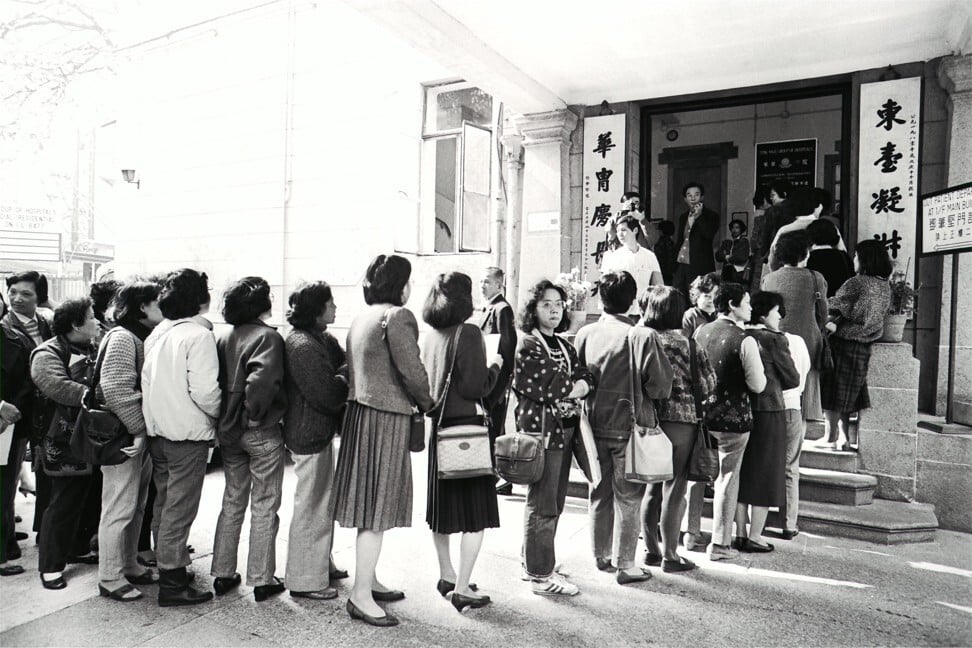
Hong Kong’s first public hospital, Tung Wah, in Sheung Wan, in 1987. Photo: SCMP
As the plague continued to savage the region, advances in Western medicine accelerated with the 1892 arrival of
. He had studied at Guangzhou’s Canton Hospital and then graduated from the Hong Kong College of Medicine for Chinese (now the University of Hong Kong), in 1892.
. He had studied at Guangzhou’s Canton Hospital and then graduated from the Hong Kong College of Medicine for Chinese (now the University of Hong Kong), in 1892.
Sun’s
initial job at the Kiang Wu Hospital was to open Macau’s inaugural
Western medicine department. He then left and opened the city’s first
mixed Chong Sai (Chinese and Western) pharmacy. It is now a museum at 80
Rua das Estalagens.
In
the 20th century, Macau’s doctors mainly trained in Portugal, Hong Kong
or Taiwan. With the opening up of China in 1978, Macau’s local Chinese
doctors could also study at Guangzhou’s Jinan University and Zhongshan
School of Medicine, as well as at new mainland medical colleges that
opened between the 1980s and 2000s.
A
key trainer at these mainland hospitals during this period of historic
health care reform in China was Fok. Armed with bachelor of medicine and
bachelor of surgery (MBBS) degrees from HKU in 1982, he trained across
Hong Kong, at Queen Mary Hospital, Queen Elizabeth Hospital, Grantham
Hospital and Tung Wah Hospital. In 1986, he finished his fellowship with
the Royal College of Surgeons of Edinburgh, specialising in minimally
invasive surgery for the treatment of oesophageal and upper
gastrointestinal tract cancers and vascular diseases.
“I
regularly trained doctors in China because I had access to science and
medical information that was still new to them, especially for
oesophageal cancer,” says Fok, who treated his father’s oesophageal
cancer. Before Henry Fok Ying-tung succumbed, in 2006, “I would fly up
to Beijing every week to check on him.”
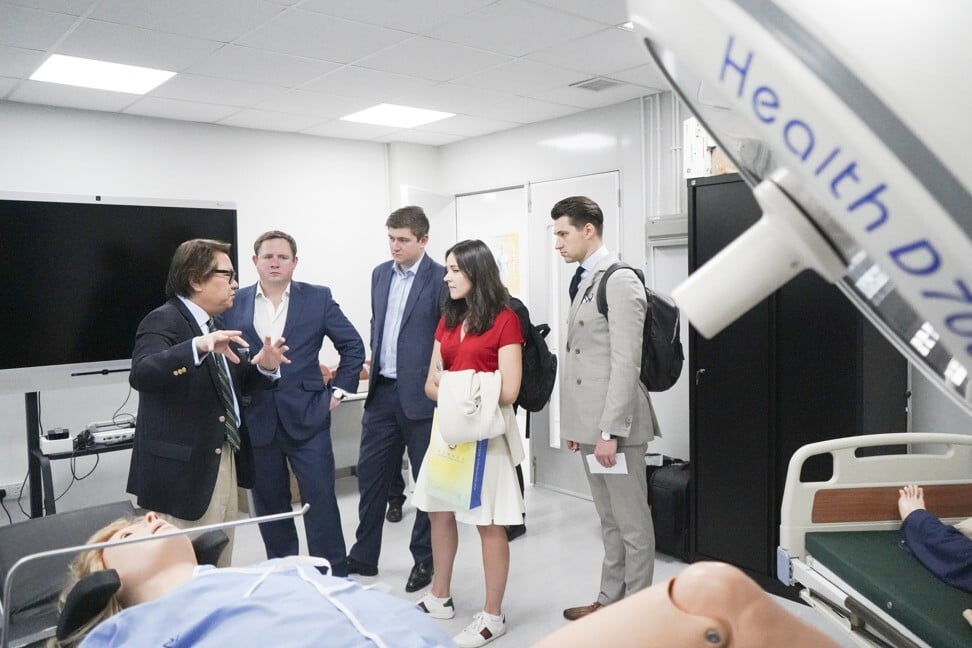
Chan leads visitors around the mock maternity ward. Photo: Christopher Cottrell
Fok Jnr tends to eschew the sort of
, Fok Snr having been one of the world’s wealthiest individuals, with a fortune of more than US$3.7 billion at the time of his death, according to Forbes. It was he who loaned the then little-known
money to join him and two other businessmen in opening Macau’s Casino Lisboa in 1970.
, Fok Snr having been one of the world’s wealthiest individuals, with a fortune of more than US$3.7 billion at the time of his death, according to Forbes. It was he who loaned the then little-known
money to join him and two other businessmen in opening Macau’s Casino Lisboa in 1970.
In 1984, Henry Fok cashed in his chips at the
, putting his majority stake into the Fok Ying Tung Foundation, which has gone on to aid human health and wellness through sports, education and medical care across China and the world. It funded part of the National Aquatics Centre, or Water Cube, built for the 2008 Beijing Olympics, and made contributions to MUST’s University Hospital, which opened in 2006.
, putting his majority stake into the Fok Ying Tung Foundation, which has gone on to aid human health and wellness through sports, education and medical care across China and the world. It funded part of the National Aquatics Centre, or Water Cube, built for the 2008 Beijing Olympics, and made contributions to MUST’s University Hospital, which opened in 2006.
Macau’s
medical past and present has been spelled out over the lunches and
dinners at every Sino-Luso forum since 2011, to international speakers
from Harvard, Stanford, the University of Lisbon, Peking University
People’s Hospital, and even to the senior brass at China’s National
Health Commission (formerly the Ministry of Health).
The Scottish heard it clearly, too.
Professor
Michael Lavelle-Jones, president of the Royal College of Surgeons of
Edinburgh from 2015 to 2018, implemented that institution’s regiment of
courses and exams at Chan’s Centre of Excellence for Professional
Medical Development in 2016, adding a potent certification process.
Members
of the World Portuguese-Speaking Countries Medical School Alliance,
which includes MUST’s Faculty of Medicine and 12 other universities from
Portugal, Angola, Brazil and Mozambique, at the signing of a
collaboration accord in Lisbon last November. Photo: Christopher
Cottrell
A
year later, in November 2017, Dr Ronald Harden, creator of the
near-universally used objective structured clinical examination (OSCE)
for medical education, also visited MUST. Inspecting Chan’s postgraduate
skills centre, with its mock ambulance, virtual-reality simulation
devices for minimally invasive laparoscopy and robotic surgery, and the
60-bed Western and traditional Chinese medicine facility at University
Hospital, he said, “You’ve basically made a medical school before having
one signed off officially. Normally it works the other way around.”
In his heavy Scottish brogue, Harden inquired, “Is it a question of ‘if’ or ‘when’ you’ll get a medical school approved?”
“When,” Chan replied, smiling confidently. “We’ve got an application with the Macau government.”
That
answer of “when” was informed by the July 1, 2017 formal signing of the
Greater Bay Area development agreement with President Xi Jinping, and
, which hit the region the following month. Hato was the worst storm Macau had experienced in 53 years, claiming 12 lives and injuring hundreds.
, which hit the region the following month. Hato was the worst storm Macau had experienced in 53 years, claiming 12 lives and injuring hundreds.
That
December, the Hong Kong and Macau Affairs Office of the State Council
announced that the chief executives of both SAR governments had
submitted proposals regarding medical education and teaching
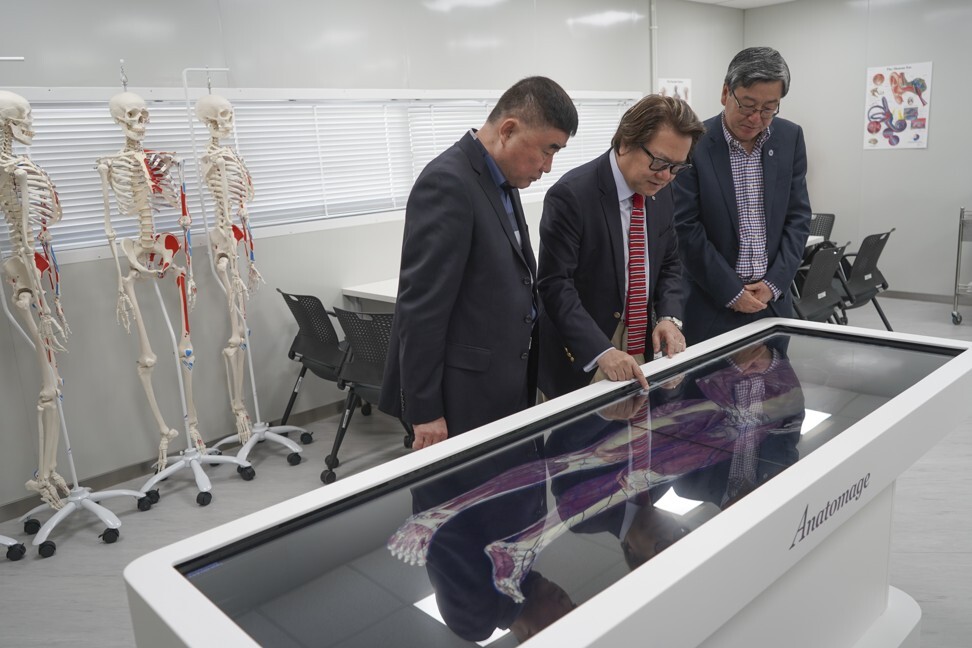
institutions in the Greater Bay Area.
Simulation anatomy training at MUST’s faculty of medicine. Photo: Christopher Cottrell
On
January 14, 2019, the Official Gazette of the Macao SAR announced the
formal approval for MUST to run an MBBSprogramme, paving the way for the
Faculty of Health Sciences, Nutrition Programme, Faculty of Traditional
Chinese Medicine with its State Key Laboratory of Quality Research in
Chinese Medicines, and University Hospital to contribute to the city’s
first Faculty of Medicine.
In
September, the first batch of 48 students were sworn in with the
Hippocratic Oath by Manson Fok. Of the 48, most were from Macau, with a
few from the mainland, Hong Kong, Taipei, Portugal and Cabo Verde – in
true Sino-Luso spirit.
As Macau partied on
December 31, 2019, the SSM was notified by the National Health
Commission that there was an outbreak of an unknown pneumonia in Wuhan.
The following day, the SSM implemented temperature checks for all
flights from Wuhan, and alerted the public to take extra hygiene
measures and not panic.
On
January 22, the SSM announced that all residents and foreign workers
could purchase 10 face masks per person every 10 days at outpatient
clinics and pharmacies in the city. A day later, with news of a second
imported case confirmed – a 66-year old Wuhan man who had entered Macau
from Zhuhai – Chief Executive Ho announced that the government had
ordered 20 million masks for affordable sales to residents and
non-resident workers.
Hygiene
orders were widely publicised by the SSM and the Macao Government
Tourism Office cancelled all Lunar New Year celebrations, scuppering the
Year of the Rat parade.
Visitors wear face masks as they walk outside The Venetian Macao, on January 22. Photo: AFP
On
January 24, universities were ordered to extend their Lunar New Year
holiday until February 10 and primary and secondary schools were to
remain closed until February 11. The Sports Bureau announced all of its
facilities closed, too.
In
the days that followed more decisive steps were taken: the Portas do
Cerco border crossing to Zhuhai reduced opening hours on January 25; a
day later it was announced that all of the more than 1,000 travellers
from Hubei province who had entered Macau between December 1 and January
26 were to be quarantined.
Further
announcements were made that no travellers who had been to Hubei in the
previous 14 days could enter any casino. From January 27, anyone who
had been to Hubei in the previous 14 days could not enter Macau without a
doctor’s note proving they were free of the coronavirus. On January 28,
in accordance with decisions made by the central government, Macau
announced that entrance of all mainland visitors would be temporarily
suspended.
In a historic stroke on February 4, Macau announced that
. As would all gathering places, from cinemas to restaurants, bars and nightclubs.
. As would all gathering places, from cinemas to restaurants, bars and nightclubs.
The
government’s rapid reaction kept the infection rate to a mere 11, until
a second wave of cases, triggered by arrivals from overseas, emerged in
mid-March, raising the tally to 45 by early April, most caught in
designated quarantine hotels.
We were able to react fast in Macau because, in the 1980s, the Portuguese administration established the Health Bureau [SSM]. Since then, the SSM has handled avian flu, swine flu and Sars
“We
were able to react fast in Macau because, in the 1980s, the Portuguese
administration established the Health Bureau [SSM]. Since then, the SSM
has handled avian flu, swine flu and Sars,” says Dr José Manuel Esteves,
president of the Macau Association of Portuguese-Language Doctors.
Dr
Esteves, who is also raising funds for medical equipment donations to
Portugal, says, “We have [one of] the highest population densities in
the world here, so we take these matters seriously and we have decades
of clinical experience. Macau is undertaking a more concerted effort
than Portugal, which did not react quickly and has had an uneven
response. But we need to stay vigilant, too, because perhaps a vaccine
cannot induce a satisfactory immunity response. We need to wait for the
vaccines’ human phase studies results.”
At
the Centro Hospitalar Conde de São Januário, where the triage centre
is, Dr Mario Evora, head of the cardiology department, says, “The
success we have had in dealing with Covid-19, I believe, is the result
of the quick and energetic response from the Macau government and the
preparedness of the Health Bureau in implementing [infection-control
measures]: early diagnosis and isolating patients confirmed or
suspected, promoting social distancing and hygiene etiquette, and
especially the universal mask policy.”
At
MUST’s medical school, news on January 29 that universities had no
timetable to resume classes led Fok to plan for all courses to move
online.
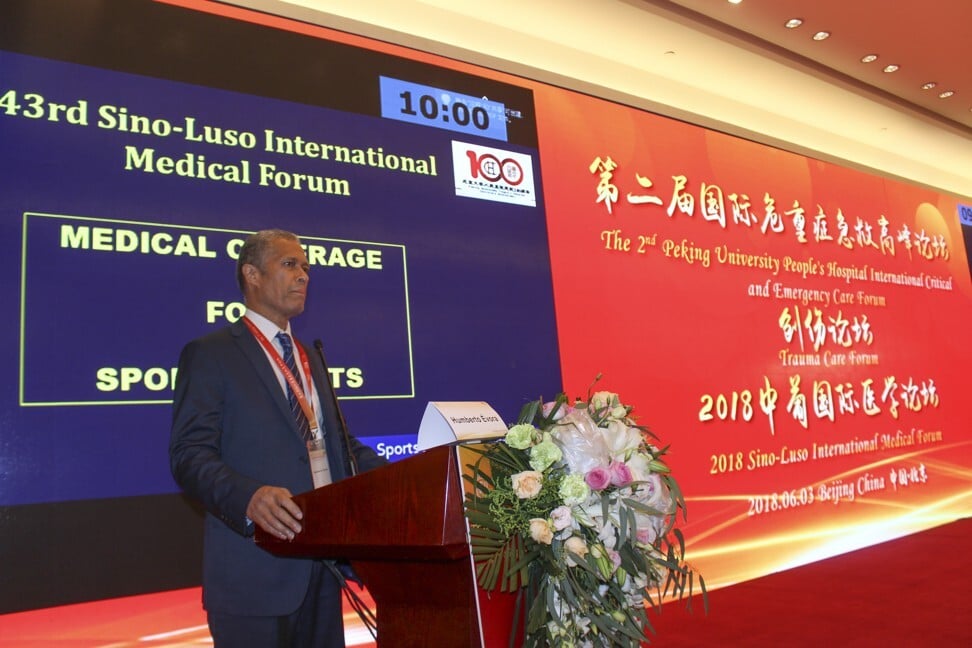
Dr Humberto Evora, a sports medicine expert, at the 2018 Sino-Luso forum in Beijing. Photo: Christopher Cottrell
Over
March, as Covid-19 swept through Milan, Madrid and Manhattan, Chan
began fielding calls for help from doctors he had befriended during the
nine years of Sino-Luso. Some of the most urgent calls came from
Portugal.
Last November, soon after being listed in the World Directory of Medical Schools,
the MUST Faculty of Medicine signed an accord in Lisbon. Apart from
MUST, it involved the University of Lisbon’s Faculty of Medicine and 11
other universities from Portugal, Angola, Brazil and Mozambique that
would collaborate in education, research and staff exchanges.
As
a founding member of the World Portuguese-Speaking Countries Medical
School Alliance, the MUST team could not have fathomed that less than
six months later Lisbon would be calling Fok and Chan in Macau to help
save lives in Portugal.
“The
work Dean Fok and I have done here for nearly a decade could not have
expected this,” says Chan. “No one could, really. But I tell you,
despite all the hardships getting it started and keeping it going over
the years, this is where it pays off. We save as many people as we can.
Diseases know no borders. Hopefully our students will take this lesson
with them for the rest of their lives.”
Comments
Post a Comment